Relaunch and Recommended Readings

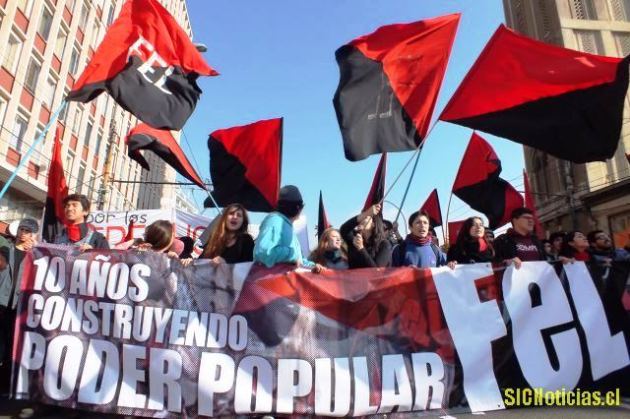
Insureccoinpopularya

Machete 408 is back serving you up with a new series of postings after a summer hiatus. A continuing state of joblessness and downgrading to a slower internet connection both put a bit of a damper on the political juices that went into the blog. But despite these, there’s a nice backlog of recently published pieces that I hope Machete 408 readers will check out. Below is a collage of recommended and recently published articles and commentaries.

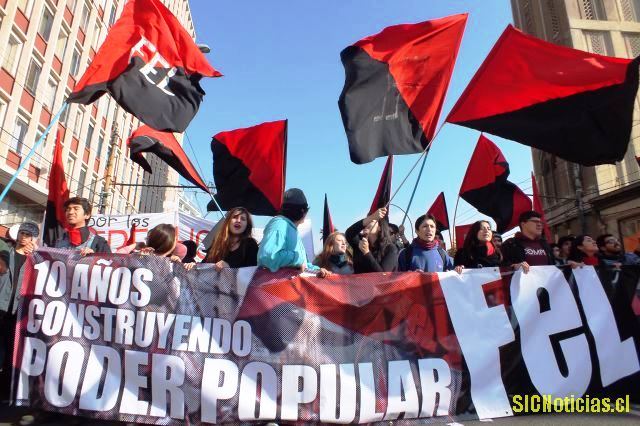
Did anyone notice a coup happening somewhere? Writing on the recent coup in Honduras, Jose Antonio Gutierrez of Ireland’s Worker Solidarity Movement (WSM) as well as the Frente de estudiantes Libertarios (FeL) in Chile, provides analysis with “Coup in Honduras: The Return of Guerillas or the Tactics of Attrition?.” Also is a piece on the potential of the recent popular uprising in Iran in response to stolen elections. “The Iranian Election, A ‘Legacy of Martyred Flowers’” is by Farah, an Iranian whom is also a member of the WSM. Both pieces appear on the Anarkismo international anarchist news and publishing site and Farah’s is followed by a lively debate in the comments section.

Looking at a global trend is “Workers Creating Hope: Factory Occupations and Self-Management” by Shawn Hattingh from Monthly Review Zine, which gives a brief overview of the growing factory and workplace occupations around the globe. The piece concludes, “The actions of these workers [involved in occupations] are inspirational. It seems likely that more and more workers will begin adopting and adapting the idea of factory occupations as a viable way to save jobs and reclaim the dignity that bosses have tried to take away from them. Perhaps what we are also seeing through the occupations, takeovers, and self-management is a glimpse of what a post-capitalist world, created by the workers and the poor themselves, would look like.”

Justice for Oscar Grant: A Lost Opportunity? On the movement and political analysis tip is the Advance the Struggle blog, founded earlier this year and written by Bay Area writers influenced by various strains of Marxism. Of interest are several pieces debating the movement that surrounded the killing of Black, 22 year old Oakland resident, Oscar Grant at a BART station on New Years Day 2009. Included is three pieces. “Unfinished Acts” is an insurrectionary anarchist piece created in the format of a composite narrative play; “Justice for Oscar Grant: A Missed Opportunity?” is a solid piece with excellent critical analysis of both the role of the RCP and the non-profit dominated CAPE coalition that led much of the community response; and “Bring the Struggle, Advance the Ruckus” a response to “Missed Opportunity” by Oakland members of the revolutionary group Bring The Ruckus is also worthwhile as well. I won’t link the pieces individually, instead you should go to their blog and find them.

For all those in the labor movement disillusioned with the lack of passage of EFCA (suprise, suprise) is the article “Introducing the Employee Liberation Act” by Daniel Gross of the IWW. There is much to be critical about of the EFCA (See the Machete 408 piece on EFCA here), but what Gross provides us with is a total rethinking of what ails the labor movement and what changes in the legal arena might actually allow for advances by workers instead of card check recognition. Its a bit of a wish list, but what he proposes is a three pronged bill that would: 1) Make discrimination against organizing in the workplace on par with federal civil rights protections around race and gender discrimination. This would make worker rights a recognized civil right as it should; 2) End the second class, modern Jim Crow status of undocumented immigrants in workplace across the US; and 3) Eliminate legal barriers and restrictions on strikes, which would unleash worker’s most powerful weapons against the power of bosses: that of solidarity and the ability to bring profits to a halt.

On an uplifting note is an AK Press blog picture report on the 2nd Annual LA Southern California Anarchist Conference, with nice shots of the jewlery, cultural and publishing vendors, as well as some of the performers and presenters for the event.

fau

Finally, on the anarchist political organization theory front we have the long awaited English translation of “Huerta Grande” by a good comrade at The Left Winger blog. The 1972 piece is considered a seminal theoretical text of the Federación Anarquista Uruguaya (FAU), which played a leading role in spawning the especifist current within the South American anarchist movement. Also be sure to read this “quick and dirty rought history piece” on the FAU for background and context.

As well, we have a recent translation of South American Anarchist philosopher Angel Cappelletti (1927-1995) posted on the AK Press Blog “Revolution by the Book.” Cappelletti was born in Argentina and spent the later half of his life in Venezuela, becoming a key intellectual figure in the libertarian left, authoring several works on philosophy, anarchism and Latin America. Supporters have recently created a Spanish language archive site of his work. And last but not least is another piece from Jose Antonio Gutierrez, who again offers us some worthwhile thoughts, but this time on strategy and the role of anarchist organization with his Considerations About the Anarchist Program. Here’s an excerpt:

The essence of the Platform is how to build an organisation that unites like-minded anarchists based on concrete proposals and tactics – that is, a “political organisation” as opposed to what is a purely ideological group. In this tradition, it is perfectly fair that we ask ourselves how many of our organisations, leaving aside any pretensions, have actually managed to reach the level of development of a political organisation. At present, the majority of these groupings are only propaganda groups. The principle difference between a political organisation and a propaganda group is not its number of militants nor its level of militancy, nor even the political insertion of its members. The principle difference is the simple answer to the question: what can we offer the people? While propaganda groups can not offer more than a political and ideological vision and, in the best cases, a few slogans, the revolutionary political organisation can offer a course of action; a programme; a tactical line; a strategy; short-, medium- and long-term objectives.

On Van Jones’ Resignation

Van Jones portrait Over the Labor Day weekend Van Jones resigned his position as an special adviser on green jobs to the Obama administration amid a flurry of controversy around attacks by the usual suspects on the right raising a fit over his past associations with the left. Its hard to speculate whether it was his own decision to resign and leave the attacks behind or whether this brought from above by an administration hoping to polish its image (as well as engage in some political capitulation) while under attack from an aggressive right.

Either way, Jones seems to have been thrown under the political bus by the White House. As Rosa Celemente, former Green Party Vice President candidate, put it in a commentary piece, Jones was a “high-profile casualty of an administration that started at the center and continues to move to the right.”

Previously, Machete 408 had written about Jones in a commentary piece “Revolutionaries in High Places- Van Jones, “ which right wing blogs picked up as a source for the pieces discussion of his membership in STORM (Standing Together to Organize Revolutionary Movements). Interestingly, shortly before his resignation, Eva Paterson, who first hired Jones as a legal intern in the early 1990’s, wrote a piece defending Jones from the right-winger attacks. Here she characterizes his recent book, The Green Collar Economy, as “a veritable song of praise to capitalism, especially the socially responsible and eco-friendly kind” and as someone who had left behind his flirtations with radical politics to move on to “more effective and attainable solutions [ie mainstream politics and questions of policy for the capitalist state].”

There are two points that I think are worth drawing from this situation. The first goes back to my original commentary on Jones and the analogy I was attempting to draw with the labor movement in “Revolutionaries in High Places- Van Jones,” which is pointing out that the top ranks of the mainstream unions in the AFL-CIO are full of those who think of themselves as opposing capitalism and supporting some form of a socialist economy, or at least at one point did. Even Samuel Gompers himself was once a socialist (see Fletcher and Gasapin, Solidarity Divided, page 14). But the question remains, what has been the practical effect of former or current anti-capitalists in positions of power with either the state or in large, reformist and top-down business unions?

Lastly, is the issue of whether of Jones’ advocacy around green jobs is a strategy to help capitalism, which Clemente raised, or a strategic approach  the larger political landscape that the left should take up? I think as “a business-based solution to attack poverty” relying on capital to promote job creation and make up for the decline of the manufacturing sector, I think it clearly rests in the first camp. But what’s striking is that this approach is exactly in line with a popular analysis on the state centered socialist left, that advocated by Carl Davidson, ex-SDS member and founder of Progressives for Obama, in his November 2008 piece “The Bumpy Road Ahead: Obama and the Left.” Interestingly it continues the idea that we can divide capitalism into worse and a better (read “progressive”) half, rather than a rotten system as a whole with contradictory aspects and players. Here’s an excerpt from Davidson’s piece:

Obama is carving out a new niche for himself, a work in progress still within the bounds of capitalism, but a ‘high road’ industrial policy capitalism that is less state-centric and more market-based in its approach, more Green, more high tech, more third wave and participatory, less politics-as-consumerism and more ‘public citizen’ and education focused. In short, it’s capitalism for a multipolar world and the 21st century. The unreconstructed neoliberalism and old corporate liberalism, however, are still very much in play. The former is in disarray, largely due to the financial crisis, but the latter is working overtime to join the Obama team and secure its institutional positions of power, from White House staff positions to the behind-the-scenes efforts on Wall Street to direct the huge cash flows of the Bail-Out in their favor … there will be a major tension and competition for funds between two rival sectors–a new green industrial-education policy sector and an old hydrocarbon-military-industrial sector. It’s a key task of the left and progressive movements to add their forces to uniting with and building up the former, while opposing and weakening the grip of the latter. This is the ‘High Road’ vs. ‘Low Road’ strategy widely discussed in progressive think tanks and policy circles.

"The Green Collar Economy" by Van Jones

"The Green Collar Economy" by Van Jones

A Labor of Criticism

  The labor movement and criticism are certainly two things that are not usually found together. On the level of day-today functioning the internal culture of many leading US mainstream unions perhaps share a fair amount in common with the military or a centralized political party– where participants are expected to “toe the line” on key issues, and most forms of criticism are frowned upon, if not looked at as close to treason– instead of an open culture of debate and critical discussion. On the broader level, around issues such as strategy, organizing models and structure, any debate to be had is largely conducted in closed door meetings by top officials. In fact, authors Bill Fletcher Jr. and Fernando Gapasin in their recent book Solidarity Divided, The Crisis in Organized Labor and a New Path Toward Social Justice speak of a ”toxic culture within the overall union movement that denies the importance of debate.” (124) 

  The recent conflict between the UNITE and HERE sides of the formerly merged HERE-UNITE, with SEIU teaming up on the side of UNITE, is a perfect example. Each party has cooked up more or less smokescreen issues to justify their power plays for control over members and organizing resources. In their attacks on each other members and staff have been bombarded with letters, flyers, mailings and even pre-recorded phone calls and some with ominous messages which take a page from the play book of union busting efforts. While I believe more more is yet to be revealed, we can gain insight into how some of this has playd out by looking at the PR battle of anonymous websites each side has used, such as HERE’s “One UNITE-HERE” and UNITE/SEIU’s project “Workers United,” which is threatening to raid HERE’s hotel and hospitality membership (who on their website reveal their affiliation with SEIU, but previously did not).

  As each side rallies its troops, demanding the loyalty of staff and members, it becomes harder to separate fact from fiction, though in the bigger picture a more true portrait of each player emerges. But amidst the intrigue, how can we develop a critical understanding of the problems the labor movement faces? And how can the labor movement develop a culture of criticism?

  I believe these two pieces are helpful starting points and examples. The following articles were published in Monthly Review’s webzine, which is a project of the same foundation that publishes the influential independent left/socialist magazine. Also see their listing of labor related articles here. The first piece, “When the Union is the Boss” by Kevin Funk and published in early 2006, is the story of a young left/radical-leaning college graduate who goes to work for SEIU as a staff organizer– which is the likely demographic of SEIU organizers. Here he tells his story of a backfired electoral campaign, which is not entirely untypical in my view of their approach to organizing, along with the fierce opposition he encounters to any suggestion that SEIU staff might form their own union.Solidaridad.jpg picture by adam_freedom

   In “A Union is Not a ‘Movement’” by Monthly Review Editor Michael D. Yates, is a 1977 reprint from their magazine of a very early criticism of the UFW under Cesar Chavez. While I’m not quite sure if I would agree with the authors characterizations of the UFW and its needs, it does take up the question of the autocratic leadership of Chavez. Also a useful read, perhaps more so than Yates piece from the late 1970s, are a links to more recent articles in a similar vein, including a 2006 seven part investigative series by an LA Times reporter that deals with Chavez’s legacy and the subsequent decline of the union.

Latin American Anarchism

 juntoscreando.jpg picture by adam_freedom

 A street mural by a Chilean anarchist cultural/muralist group (Read an interview with them in Spanish here).

  There’s a rich history and tradition of anarchism in Latin America that is still largely waiting to be translated and brought to the attention of the left and others who focus on the region. Below is a review by Chuck Morse of negations.net (also staff with AK Press) of three Spanish language works on the history of Latin American Anarchism by authors from the region. While none of the books reviewed are comprehensive treatments by any means, each work has a strong focus on the heavy role that anarchists played in the labor movement of Latin American countries as well as the tranformative cultural impact that anarchists had as well. You can also check out the Latin American Archives of negations.net, with .PDF of over 50 issues of several anarchist publications from 1917 to 1940 including Alborada, Hombre de America, La Humanidad, Nervio, Prometeo, and Suplemento Quincenal La Protesta.


Latin American Anarchism

(From The New Formulation, February, 2003)

Review by Chuck Morse (original link)

Cronica Anarquista de la Subversion Olvidada by Oscar Ortiz
and Contribución a una Historia del Anarquismo en América Latina by Luis Vitale
Santiago, Chile: Ediciones Espíritu Libertario, 2002

Anarquismo y Anarcosindicalismo en América Latina
By Alfredo Gómez
Paris: Ruedo ibérico, 1980

Anarquistas en América Latina
By David Viñas
Mexico City: Editorial Katun, 1983

- – -

  There are important reasons for anarchists in English-speaking parts of North America to study the history of Latin American anarchism.

  One reason is political. We need to form principled, collaborative relationships with our Latin American comrades to fight global capitalism globally and, to do so, we obviously need be able to identify our real comrades among the countless groups in the region that make claims upon our solidarity. Should we “defend the Cuban Revolution” or toast Lula’s social democratic victory in Brazil? Should we adopt the Zapatista ski-mask as our emblem or devoutly align ourselves with small anarchist groups? A genuine confrontation with these questions requires a deep appreciation of the history of Latin American opposition and certainly the anarchist movement has played a significant role in this history.

Read more »

Especifismo, Social Insertion and Recent Anarchist Organization

Workermeeting.gif picture by adam_freedom

  A new edition of the “Especifismo Reader: Anarchist Organization and Praxis” has been made publically available. Topping 120 pages, the updated reader includes several newly translated pieces such as the short political statement “Who We Are, What We Want, The Path We Follow” by Coletivo Comunista Anarquismo in Brazil, the article “Anarchist Advances in Uruguay and Brazil” and the “Interview with the Rio de Janeiro Federation” not included in the first edition of the reader,  as well as several excellent though yet to be translated pieces in Spanish. The next steps for this reader are the inclusion of several more pieces by Latin American anarchists and a organization in Mexico, as well as a section of articles called “Towards a North American Especifismo,” with pieces written by North American anarchists influences by the Especifismo Latin American Anarchist tradition. 

  One of the key concepts of the Latin American Anarchist tradition of especifismo is ”social insertion.” I admit there is a bit of a funny sound to it, but this is the concept they use to define the relation to mass struggles and movements. To them anarchist involvement in the social struggles must be firmly rooted, argues for anarchist values rather the conversion of movements to ”anarchism itself” or a specific political line, and which aims to build popular power (horizontal power and “of the base” I think are similar concepts from Latin American traditions that readers might also be familar with).  

  My friend Nate of What the hell…?  blog takes up the topic with a response/reflection piece after reading several pieces by written by especifist groups as well as my own piece included in the reader above,  ”Especifismo: The Anarchist Praxis of Building Popular Movements and Revolutionary Organization in Latin America.” With heaps of comradely respect I feel Nate is missing some of the arguements and the context for the discussion on especifismo and in some part I think he is perhaps pointing out sections of the writings that are unclear and can lend themselves to misinterpretation. Check out his thoughts and my response and I encourage folks to leave comments on his page with their own.

  In fact, Nate is on a bit of a roll as of late. Here’s another discussion posting on contemporary anarchist politics with Nate’s review and comments on the mission statements and points of unity of current anarchist organizations in North America. Even better is that it includes links if you would like to read more. Next, is his piece discussing the importance of mass organizing work, along with a draft an article where he hopes to better lay out his perspectives on this. Finally, he writes reviews/quick responses  to several of the Furious Five Revolutionary Collective, a 2003-2005 Anarchist-Communist collective based out of San Jose, CA that was influenced by the ideas and writings of the Latin American Especifist anarchists. Their writings are archived on this blog

The Revolutionary’s Prayer and The Wobbly Prayer

durutti.png picture by adam_freedom  Whether on TV or that one time you went to church and paid attention, we’ve all heard the Lord’s Prayer at least once. But could there be a prayer for those us who rather than ascending from heaven to earth, seek instead to ascend from earth to heaven in our analysis as St. Marx says? Or in other words seek to make the world  the amazing place that it could be in the here and now?

  Certainly being being a revolutionary or a embracing the “wobbly spirit” of the IWW is hard enough that one would need all the support they could get, god or otherwise. Things to keep in mind are that a little bit of humor and generosity can help our comrades when they are feeling down and help the movement by keeping our spirits bright. Feel free to pass this along, but please credit this blog.  -AW 


The Revolutionary Prayer

Hail Durutti, full of solidarity,

hallowed be thy cause.

The Revolution will come,

the People’s will will be done.


On earth as it is in social relations.

  Read more »

Remaking Labor–From the Top-Down? Bottom-Up? or Both?

J4J.jpg picture by adam_freedom

  This is an amazing review which captures what many folks that I know have been saying since the early 2000’s. The writer, long time labor activist Steve Early, contrasts the perspectives between two recent authors and their analysis of the labor movement in LA Stories: Immigrant Workers and the Future of the Labor Movement by UCLA professor Ruth Milkman and US Labor in Trouble and Transition: The Failure of Reform from Above the Promise of Revival from Below by Labor Notes co-founder Kim Moody. It articulates well the critique of the professional staff driven “change from above” unions (such as SEIU and the unions associated with the Change to Win Coalition) which often brand themselves as progressive or social movement unions, or are characterized as such by their supporters on the left and academia. What the review unfortunately doesn’t do well is delve into the concrete of  Moody’s potentially alternative vision for “revival from below.” Early roundly criticizes Milkman’s support for SEIU and the “change from above” approaches in the labor movement:

Milkman “never addresses the serious concern … that SEIU growth has been achieved, in some sectors, at the expense of contract standards, community allies, workers’ rights, membership participation, and leadership accountability.” Milkman’s infatuation with the vanguard role of the union’s “innovators”—college educated organizers, researchers, strategic campaign coordinators, local officers and trustees—also leaves little room for examining more incisively how SEIU operatives actually interact with the working members who nominally employ—and, more rarely, elect—them.

  Unfortunately the boosterism and cheerleading on behalf of the “change from above” self-styled reformers that comes from academics like Ruth Milkman as well as other authors such as UC Berkeley professor Kim Voss (with her Hard Work, Remaking the American Labor Movement with Rick Fantasia)was parroted or perhaps reluctantly swallowed by many on the left so disappointed with the conservatavism of mainstream labor that any promise of change seemed better than nothing. Only with the recent moves by SEIU and the division between HERE-UNITE has the thin curtain been pulled away to reveal the situation that has been at hand for many years. Sadly I feel many radicals, myself included of course, missed the boat in not putting forward these criticisms sooner when they became apparent in the early 2000’s, perhaps even the late 1990’s. Let it be a word to the wise.


Remaking Labor–From the Top-Down? Bottom-Up? or Both?

By Steve Early (original link to this review online here)  

Review of: Milkman, Ruth. L.A. Story: Immigrant Workers and the Future of the U.S. Labor Movement. New York, NY: Russell Sage Foundation, 2006. 244 pp.$24.95 (paper).

Moody, Kim. U.S. Labor In Trouble And Transition: The Failure of Reform from Above and the Promise of Revival from Below. New York, NY: Verso, 2007. 289 pp.$29.95 (paper).

From Working USA: The Journal of Labor and Society, March, 2008 Vol 11. Issue #1

The veterans of Sixties radicalism who became union activists in the 1970s belonged to a variety of left-wing groups. Regardless of other political differences, most of them shared one common belief—namely, that union transformation and working class radicalization was a bottom up process. As Stanley Aronowitz observed in Socialist Review (nee Socialist Revolution) in 1979—when Ruth Milkman, author of L.A. Story, belonged to its “Bay Area Collective”—young radicals usually became “organizers of rank-and-file movements” and builders of opposition caucuses. They immersed themselves in “day-to-day union struggles on the shop floor” and the politics of local unions, often displaying in the latter arena “almost total antipathy toward the union officialdom.” Because “union revitalization” also required organizing the unorganized, rather than just proselytizing among existing union members, Aronowitz approved, “under some circumstances,” leftists becoming “”professional paid organizers.” But he encouraged those who took this path to “see their task as building the active rank and file, even where not connected to caucus movements.”

Read more »

Looking at the Contours of the Crisis

capitalismisnotworking.jpg capitalism isn't working picture by adam_freedom

  With “Contours of the Crisis” in the latest issue of Upping the Anti #8 (see two posts previous), Aidan Conway interviews three leading thinkers on contemporary capitalism who also each happen to be professors of political economy at York University in Toronto as well. They are David McNally, Sam Gindin and Leo Panitch. Below are three highlights that raise worthwhile points to think about around the financial crisis and building “the other world that is possible” as we might say.

  Here on the relationship between class struggle at home and imperialism abroad, which are intracately interwoven.

  Sam Gindin: If and when, during the next decades, the foundations of American empire were to really crumble, class struggles within the imperial heartland itself would likely play a major role in bringing this on – precisely because of the way in which the external and internal dimensions of American empire are intertwined. At the same time, the ability to pacify the citizens of the empire is critically dependant on the ability to maintain wider structures of global exploitation and integration. (emphasis added)

Read more »

What Would a Relevant Anarchist Politics Look Like?

ArgentinaMayDay.jpg picture by adam_freedom Workers and popular organizations connected to the anarchist movement rally on May Day 2009 in a public square in Argentina.

  What would an anarchist politics look like that spoke to the needs of today’s realities and to today’s movements? How can revolutionaries apply the values of anarchism to an understanding of building mass movements from below, an understanding of power, a vision of a future society with the understanding of the organization needed to reach it, coupled with a strong analysis of race, patriarchy, gender and issues of queer liberation?

 OvertownMiami.jpg picture by adam_freedom Miami Autonomy & Solidarity (MAS, pronounced like the word “más” in Spanish) is a small organization of revolutionaries based out of the fourth largest metropolitan areas in the US. While Miami is a hub of international trade and finance, it’s also the third poorest city in the US and with a majority immigrant and people of color population (nearly 60% were born outside the US). Much like the US/Mexico border, Miami is a city where the third and first world grate against each other. Interestingly, similar to the rest of the US South, the city lacks much of an established left as would other large metropolitan areas such as New York, Boston, Chicago and the Bay Area.

  The organization has been in a process of formation, study and debate for over a year prior to announcing themselves publicly in mid-May 2009. While there are certainly a number of well spoken and excellent individual thinkers in the anarchist milieu, MAS’s Points of Unity below represents one of the best collectively written organizational statements of anarchist politics in North America to this date in my opinion. A recommended read.


Miami Autonomy & Solidarity Points of Unity

  Miami Autonomy & Solidarity is an organization of people whom have come together for the purpose of developing a revolutionary organization that works within social movements, as well as on the revolutionary level with the ultimate goal of contributing to an autonomous popular class movement of the oppressed that will overthrow capitalism and the state, as well as ending all forms of oppression.    

Role of the Specific Revolutionary Organization 

  Our specific revolutionary organization is a group founded on and working towards theoretical and strategic unity, as well as tactical coordination amongst its members. These organizational principles serve to strengthen our efficiency and effectiveness in developing our ideas and strategies within the broader working class movement. It must be stated that the need for such a group arises out of the practical struggles of the working class to transform itself into a revolutionary class capable of overthrowing capitalism and the state; as well as building society along egalitarian, self-managed, and directly democratic lines.  

  Through our specific revolutionary organization we seek to contribute to the theoretical development of revolutionary social struggles. We engage in the creation of media that communicates the views and political line of the organization, and we directly participate in struggles based on a common strategic program and coordinated activity. The political organization helps keep a historical memory of struggle and ongoing organizational strategic assessments of struggle in mass movements . We strive to retain experiences of success and failures in order to strengthen the social struggle.

  However, unlike some political parties that try to use social movements as a tool to develop their own power, our organization’s relation to the social movement’s is reversed: our organization is a tool of our members and sympathizers within the social movement used to contribute towards the power of the social movements through the development of the autonomous consciousness, capacity, and solidarity of these movements.   We never seek to dominate, impose upon, manipulate, command or control the movements we’re a part of.  Rather we seek to participate as equals within the struggle, offering our ideas and methods as short and long term proposals for the movements towards liberation.  Read more »

What’s Interesting in Upping the Anti #9

uta_8_final_cover.jpg picture by adam_freedom  Upping the Anti out of Toronto, Canada is perhaps the hottest and best radical left theory/movement journal since it first began publication in late 2005. Releasing its eighth issue as of May 2009, the journal has provided a steady content of articles, interviews, reviews and topic based roundtables by and with movement activists and organizers on the radical left.

  With the tag line “a journal of theory and action” the journal leans towards the more academic side. But unlike some of the more dense and long running left journals (Monthly Review comes to mind), the editorial collective and contributors are nearly all folks engaged in struggle and much of the theory and discussion comes directly out of movement organizing work. It’s not another left journal for radical college professors, but for folks in the movement trying to grapple with many of the difficult issues and conversations that those seeking to create revolutionary change should be. Perspective wise they maintain a pluralistic and non-party stance combined with anti-capitalism, anti-imperialist and anti-oppression politics (the three antis as they call them). Read reviews of issues #3 here and issues #2 and #3 here.

  With this issue UTA brings us an interview “Contour of the Crisis” with three political economy instructors at York University in Toronto on the realities and opportunities for the left in the current financial meltdown (discussed above);  “Movements Where People Can Grow” is an interview/discussuion with Helen Hudson (who among other groups is a board member of the Institute for Anarchist Studies, see their new spiffy website here) with her thoughts on building long-term and sustainable movements; a roundtable with former activists of SLAM (Student Liberation Action Movement, audio archive here) active in opposing tuition increases in the New York public university system in the 1990’s and discussing their strong leadership from women of color; and another roundtable with members of various study groups/circles taken up by radicals in a number of cities.

Helen_Keller.jpg picture by adam_freedom Also, here’s a quote from the back cover of this issue that warms my heart from Helen Kellar, the advocate for the blind. Often left out of history is her radical politics as an anarchist and member of the IWW.

  Capitalism will inevitably find itself face to face with a starving multitude of unemployed workers demanding food or destruction of the social order that has starved them and robbed them of their jobs. in such a crisis the capitalism class cannot save itself… Its police and armies will be powerless to put down the revolt. (1918)

  Here is also a quote on how she first moved towards radical politics from her Wikipedia entry…

   I was appointed on a commission to investigate the conditions of the blind. For the first time I, who had thought blindness a misfortune beyond human control, found that too much of it was traceable to wrong industrial conditions, often caused by the selfishness and greed of employers. And the social evil contributed its share. I found that poverty drove women to a life of shame [referring to prostitution and syphilis] that ended in blindness.